Richard Sibbes
1577–1635
A Cambridge preacher so gentle and warm that he was called “the heavenly Doctor.” No one writes more tenderly about Christ’s kindness to weak and struggling believers.
Start with The Bruised Reed
Keeping the Heart exists to put the old paths of Puritan piety back into the hands of ordinary Christians, families, and small churches.
Many Christians today sense that something is missing. We are busy, distracted, and tired, and our faith often feels thin.
The usual answer is a new method: a fresh technique, a borrowed practice, another program. But the Puritans of the sixteenth and seventeenth centuries would have pointed us somewhere older and steadier. They believed God had already given His people everything needed for a deep and lasting walk with Him, and that the Christian life is cultivated slowly, at the kitchen table and in the congregation, through ordinary means a merciful God has promised to bless.
“Keep thy heart with all diligence; for out of it are the issues of life.”Proverbs 4:23
Our name comes from that verse, and from John Flavel’s classic treatise on it, often published simply as Keeping the Heart. Flavel called the keeping of the heart the great work of the Christian life. We agree, and we want to help ordinary believers take up that work with joy rather than dread.
These resources are meant to be useful whether you worship in a Baptist, Presbyterian, or Congregational church. The Puritans themselves came from all three, and they shared a common heart for God.
Everything we make grows out of these.
The Christian life begins with who we are in Christ, not with what we achieve. We are joined to Him by faith, and every blessing flows from that union.
So assurance comes first. Honest self-examination grows out of resting in Christ, not out of anxiety about whether we measure up.
God is after more than correct beliefs and outward behavior. He renews the affections, the loves and longings of the heart.
The Puritans called this experimental religion: truth not only known but tasted, so that obedience flows from delight in God.
The Word, prayer, the sacraments, and gathered worship on the Lord’s Day are how God actually shapes His people.
Our resources are meant to send you back to these, and to your local church, never to replace them.
A brief summary of the historic Protestant faith we hold and teach.
The Bible is the inspired Word of God, without error, and the only sufficient and authoritative rule for all of faith and life.
There is one living and true God, eternally existing in three persons, Father, Son, and Holy Spirit, equal in power and glory, who made and governs all things for His own glory.
All humanity fell in Adam and is by nature guilty, corrupt, and unable to save itself.
Jesus Christ, the eternal Son of God, became truly man. He lived a perfect life, died as a substitute for sinners, rose bodily from the dead, and now reigns and intercedes for His people.
Salvation is God’s work from first to last. Sinners are justified by grace alone, through faith alone, in Christ alone, for the glory of God alone.
The Spirit gives new life, unites us to Christ, makes us holy, and keeps all true believers to the end.
Christ gathers His people into local churches, where the Word is preached, the sacraments are administered, prayer is offered, and believers grow together, especially on the Lord’s Day.
Christ will return in glory to raise the dead, judge the world in righteousness, and bring His people into the everlasting enjoyment of God.
We gladly stand in the stream of the great confessions of the Puritan era, the Westminster Confession, the Savoy Declaration, and the Second London Baptist Confession, which agree far more than they differ. Where they differ, on matters like baptism and church government, we leave those questions to your own church and its confession.
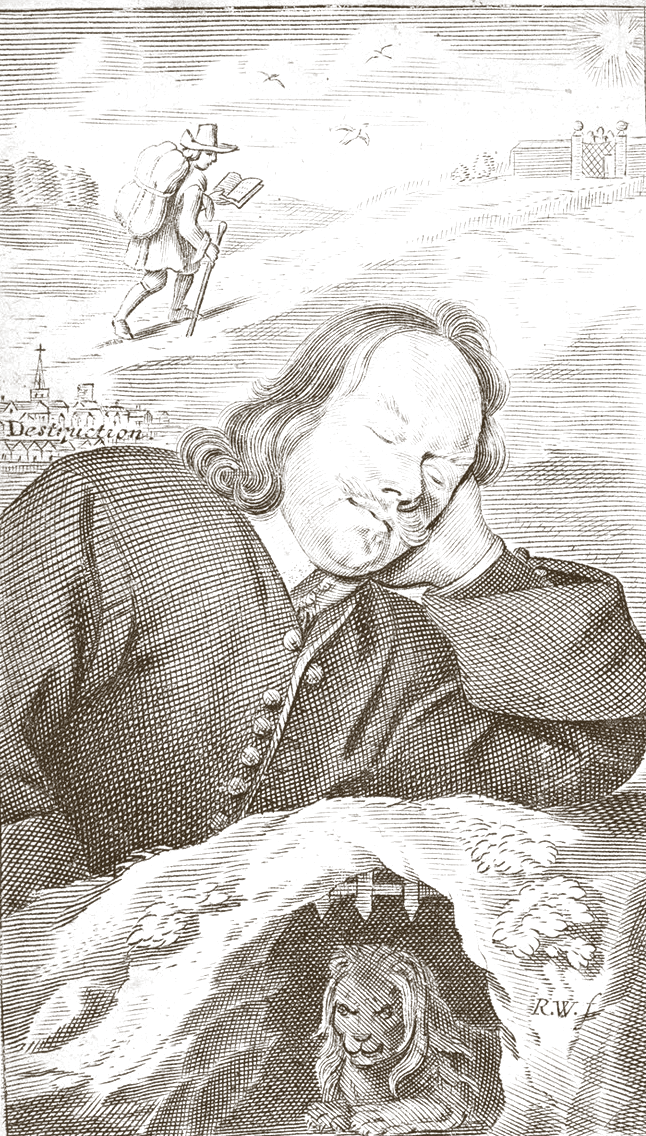
These are some of the pastors whose writings shape our work. They came from different churches, but they shared one great concern: the heart’s communion with God.
Bunyan pictured the Christian life as a pilgrimage: a burdened traveler, Bible in hand, leaving the City of Destruction for the narrow gate. The writers below are the kind of companions every pilgrim needs along the way.
A Cambridge preacher so gentle and warm that he was called “the heavenly Doctor.” No one writes more tenderly about Christ’s kindness to weak and struggling believers.
Start with The Bruised Reed
Perhaps the greatest English theologian of his age, and Vice-Chancellor of Oxford. Owen wrote deeply on fighting sin and on enjoying fellowship with each person of the Trinity.
Start with Communion with God
A London pastor with a gift for plain, memorable sentences. His sermons on the Westminster Shorter Catechism are still one of the best ways into Christian doctrine.
Start with A Body of Divinity
A seaside pastor in Dartmouth, Devon, who kept ministering in secret after he was forced from his pulpit. His treatise on Proverbs 4:23 gives this project its name.
Start with Keeping the Heart
A member of the Westminster Assembly known for his peaceable spirit. He wrote one of the most practical books ever written on finding satisfaction in God whatever our circumstances.
Start with The Rare Jewel of Christian Contentment
A tinker turned preacher who spent twelve years in Bedford jail rather than stop preaching. From that cell came the most beloved picture of the Christian life ever written.
Start with The Pilgrim’s Progress
A London pastor who was put in the pillory for a children’s primer, signed the 1689 Confession, and taught Baptists to sing. The Baptist Catechism bears his name.
Start with The Travels of True Godliness
A Bristol Baptist of the Commonwealth years, who wrote with rare warmth about the free grace of God to sinners and the joy it brings to saints.
Start with Good Tidings for Sinners, Great Joy for Saints
A Lancashire minister who withdrew for a month each year to pray and meditate. He wrote one of the richest books on looking to Christ in every part of His work.
Start with Looking unto Jesus
Alongside them are many others we love, like Thomas Brooks and Samuel Rutherford, whose words you’ll meet in the app.
Start learning the faith one question at a time, or take the old paths with you on your phone.